Affiliate Disclosure: This post may contain affiliate links, which means the American Crochet Association may earn a small commission from qualifying purchases made through links on our site, at no additional cost to you. Learn more on our Disclosures and Disclaimers page.
Ever tried swapping out yarn for a project and felt like you were piecing together a puzzle—except half the pieces were missing?
Yeah, you’re not alone.
Yarn substitution can be tricky, and if you’ve ever caught yourself wondering…
- What even counts as a substitution?
- How do I know if I’m doing it right?
- Can I just swap acrylic for wool and move on with my life?
…then welcome to the club!
See, yarn isn’t just about weight or fiber—it’s about texture, drape, elasticity, durability, and stitch definition, too.
That means grabbing another skein in the same weight category doesn’t always cut it.
One yarn might make your project soft and flow-y, while another turns the same pattern into a stiff, unforgiving paper bag.
But here’s the thing: It’s not you—yarn is just complicated.
The good news?
With the right questions, a little know-how, and some handy resources, you can confidently pick the best yarn for any crochet project.
Let’s start with the basics and break it all down.
Estimated reading time: 8 minutes
Table of contents
This article may contain some affiliate links.
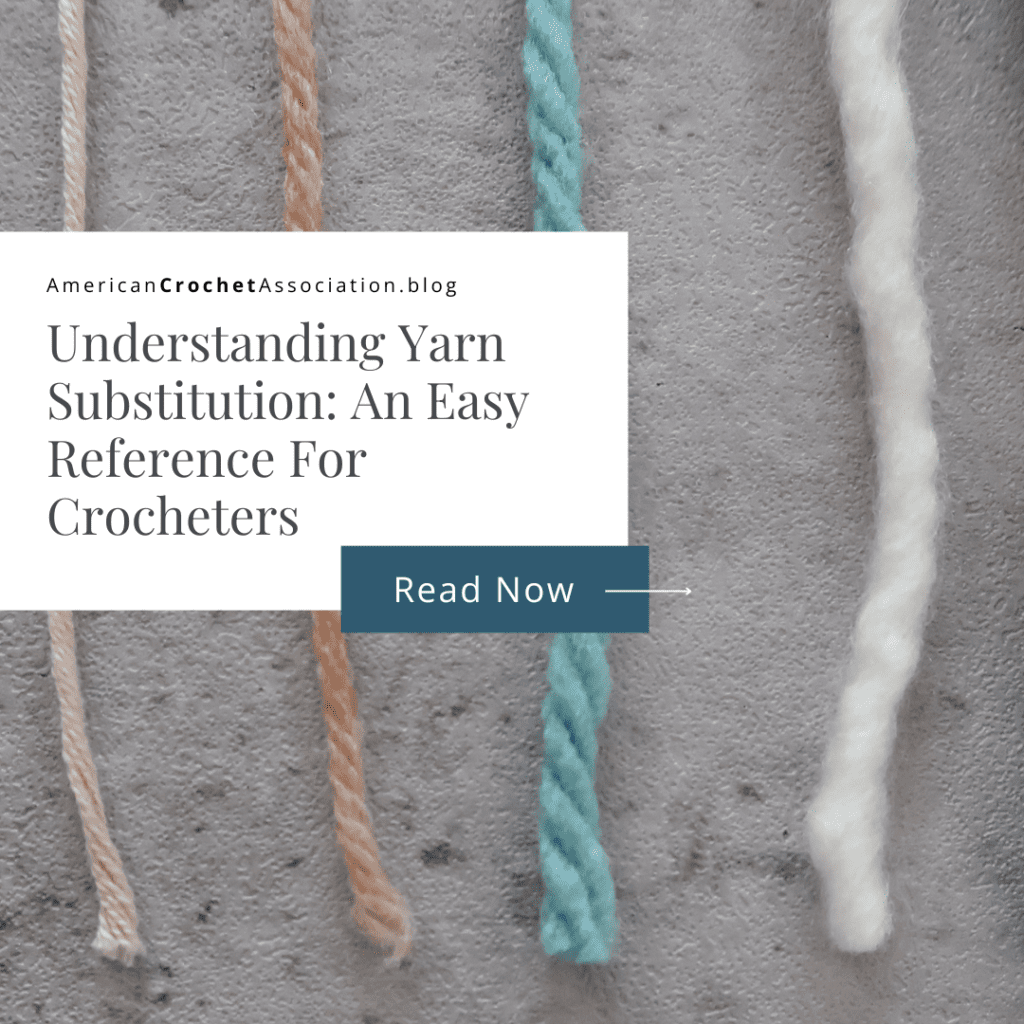
What is yarn substitution?
Yarn substitution is simply choosing a different yarn than what the pattern suggests.
That’s it. That’s the whole concept.
But actually doing it? That’s where things can get a little tricky.
Does yarn substitution matter?
If you’re even asking this question, you’re already thinking like a pro—because yes, it definitely matters!
Maybe the yarn a pattern suggests is discontinued, out of your budget, or just not your style.
Or maybe you’re staring at your stash, wondering if you can make it work without another trip to the craft store.
Whatever the reason, knowing how to choose a good alternative is key.
The right substitution can help you match the pattern’s size, shape, and drape so your finished project actually looks and functions the way it’s supposed to.
The wrong one?
Well… let’s just say it might not turn out as expected (unless you were going for “accidental creative interpretation”).
Bottom line: Yarn substitution matters—and the better you understand it, the more confident you’ll be in choosing the perfect yarn for any project.
How can I choose the right yarn?
It’s easy to get caught up in yarn first—after all, it’s colorful, pretty, and full of possibilities!
One skein can spark a hundred ideas.
But here’s the thing: every yarn has limits.
Its weight, fiber, and structure determine how it behaves in a project.
So instead of picking a yarn and hoping for the best, flip your thinking—start with the finished project in mind.
Ask yourself three key questions:
- Size – Will this yarn give me the right dimensions?
- Function – Will it hold up the way I need it to?
- Feel – Will it drape, stretch, or soften the way I want?
These questions help you focus on the outcome first, so you can choose a yarn that actually works—not just one that looks good on the shelf!
Yarn and Fabric Size
Size is always a good starting point when choosing a yarn alternative.
Here’s a simple way to think about it:
Yarn creates stitches → stitches create fabric → fabric determines the overall project size.
See how it all connects?
That’s why getting the right yarn size matters—especially for things like fitted garments and accessories, where even a small difference can throw off the final result.
If size is crucial, you’ll want to match your yarn choice as closely as possible to what the pattern suggests.
Yarn comes in 8 commercial weight categories, ranging from the thinnest lace to the chunkiest jumbo:
- Weight 0 – Lace
- Weight 1 – Super Fine
- Weight 2 – Fine
- Weight 3 – Light
- Weight 4 – Medium
- Weight 5 – Bulky
- Weight 6 – Super Bulky
- Weight 7 – Jumbo
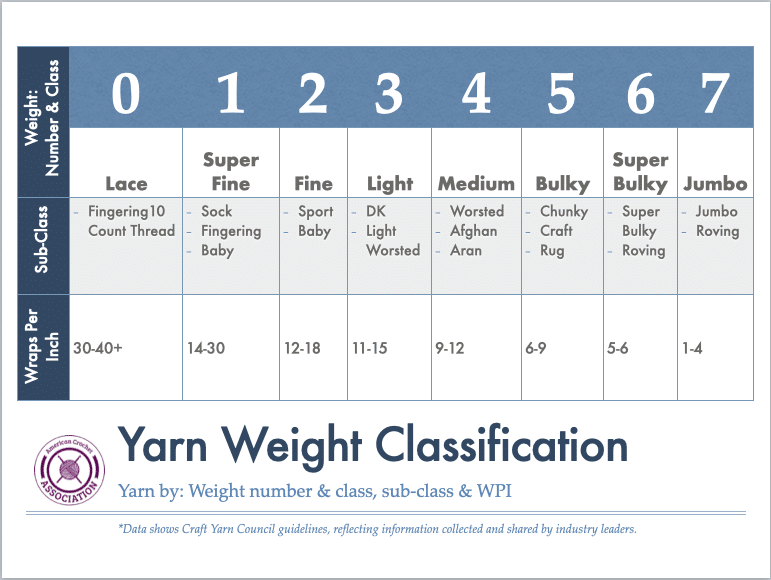
Every weight category has further sub-categories.
For example, the weight 4 category includes a few different individual sizes (Worsted, Aran, Afghan) that all work up slightly differently.
You can learn even more about yarn weights, and get a handy cheat sheet, right here: Yarn Weights Explained – A Guide For Crocheters
Check out our Crochet Memberships for all skill levels!
From First Stitch to Crochet Career, Unravel Your Complete Journey With The American Crochet Association!
Example
Let’s try an example with a real-life crochet pattern…
First, find the Ombre Beanie Crochet pattern: Ombre Beanie – Easy Crochet Hat Pattern in 6 Sizes
This pattern has instructions for 6 individual sizes (14-24”).
To create the 22” pattern size, there are a few details to note:
- Yarn weight and type. Red Heart Super Saver Ombre, worsted weight #4 yarn, 100% acrylic.
- Gauge: 14.5 Dc stitches = 4”, 7 Dc rows = 4”
- Hook: US I/9 (5.5 mm)
What are these details?
The pattern writer created a hat, then listed the details of their own specifications so that you can follow their instructions to recreate it.
You’ll have to follow their instructions and specifications to create a specific size.
If you want to use a different yarn than the pattern calls for, your alternative has to also fit the same specifications (same yarn weight, type, gauge).
If you’re still getting a feel for finding good yarn substitutes based on size, try yarnsub.com!
Yarn and Fabric Function
Function is all about how your finished project needs to perform.
Before choosing a yarn, ask yourself: What do I need this fabric to do?
Let’s take the Ombre Beanie as an example.
A hat like this gets a lot of wear, so the fabric has to hold up over time.
That means considering a few key factors:
- Shape – Will the fabric keep its structure, or will it stretch out after a few wears?
- Durability – Will the yarn pill, felt, or break down with friction and sweat?
- Temperature Control – Different fibers behave differently! Wool and cotton are breathable, while acrylic locks in warmth.
The best way to know how a yarn will function? Swatch it!
Work up a small sample in the stitch pattern to see how it behaves.
Feeling a skein in your hands can be deceiving—how it crochets up is what really matters.
Also, consider the weight of the fabric you’re creating.
For the Ombre Beanie, you don’t want something too light and drape-y (hello, floppy hat) or too heavy and stiff (goodbye, comfy fit).
At the end of the day, function is all about whether the yarn does its job—helping your project turn out the way you intended.
To learn more about how to crochet a swatch with yarn, check out this article: How To Crochet a Swatch
Yarn and Fabric Feel
Think about shopping for towels, sheets, or a sweater—you always run your hand over the fabric first, right?
That’s because feel matters! And you already have expectations:
- Sheets shouldn’t feel like towels.
- A rug can feel like a sweater, but do you really want to wear a sweater that feels like a rug? Probably not.
The same logic applies to yarn.
What feels best is completely personal—there’s no wrong answer!
But here’s the catch: yarn feels different in the skein than it does as a finished project.
A soft, fluffy yarn might work up into something dense and heavy, while a slightly rougher yarn could soften beautifully after washing.
The only way to really know how a yarn will behave? Swatch it!
Crochet with it, stretch it, wash it—see how it transforms before committing to a full project.
Feel is a big part of loving what you make, so trust your hands and your stitches!
Example
Let’s think about the Ombre Beanie for example, but remember that your personal choice may be different than mine.
If I’m wearing the Ombre Beanie the fabric should be:
- Sturdy: Not scratchy or too stiff for the top of your head.
- Soft: Squishy is okay, but make sure the fabric isn’t too stretchy or it will become misshapen.
How can I learn to substitute yarn?
Yarn substitution is something that gets easier with practice, over time.
Before you can substitute yarn like a champ, try some of these tips:
- Learn more about yarn weights and fibers! There is a lot more to yarn than just pretty colors, and the more comfortable you get learning different characteristics the better you’ll become at choosing yarn for a project.
- Practice makes progress, especially when it comes to understanding yarn, and the fabric yarn creates.
- Try a few patterns where size matters, but isn’t crucial, like a Market Tote, Crochet Basket, or washcloth!
And finally, don’t be too hard on yourself – yarn is tricky!
Have fun learning, and don’t be afraid to try new patterns, yarns, and project types to gain experience!
Video Chat
For even more details on this subject, watch my video chat right here:
What do you think?
Let me know in the comments or CLICK HERE to start sharing in our community!
Peace, Love & Crochet –
Salena